Loading...
Designed to Ensure Compatibility, Quality Control and Quicker Installation!.
Flexible Film (Softwall) Single-Tier Isolator "Starter Lab" Package
Flexible Film (Softwall) Isolator "Starter Lab"
CBC Single-Tier "Starter Lab" packages ensure compatibility, quality control, Quicker installation, better traceability & easier reorders.
CBC Single-Tier "Starter Lab" packages comes with all the accessories and components required for researchers to establish a germ-free, gnotobiotic lab for viral, microbiome and microbial studies!
Note: All packages can be customized to meet a customer's specific research needs. The items listed below are included in our standard "Starter Lab" package to better give you an idea what is usually included.

Standard (Positive Pressure) Single-Tier System Sizes:
- 30" x 2' x 2' – Single-Tier/One isolator.
- 3' x 2' x 2' – Single-Tier/One isolator.
- 4' x 2' x 2' – Single-Tier/One isolator.
- 60" W x 30" H x 27" D – EU-Single-Tier/One isolator.
- 5' x 2' x 2' – Single-Tier/One isolator.
- 6' x 2' x 2' – Single-Tier/One isolator.
- Note: All of the above system sizes are also available as negative pressure systems.
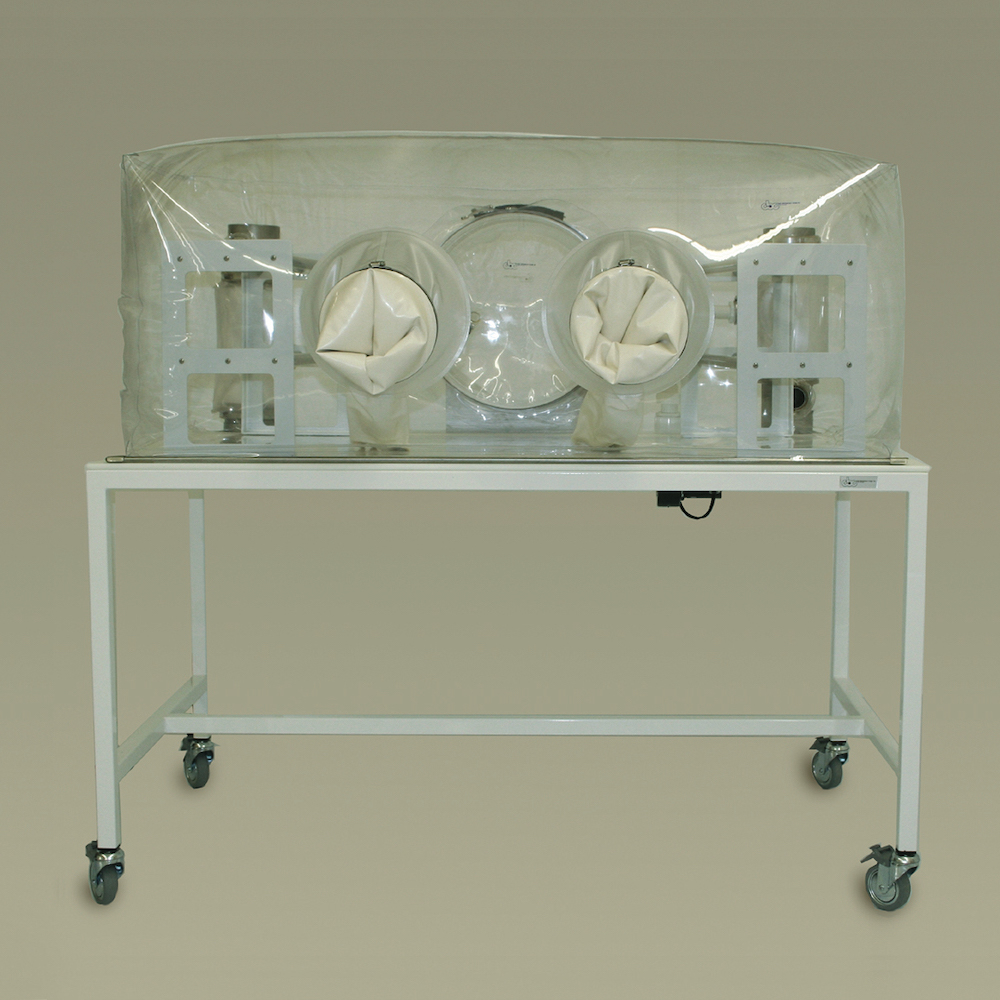
Single Flexible Film Isolator "Starter Lab" Package
CBC Single-tier flexible film isolator "Starter Labs" come with all hardware and components necessary for assembly.
For gnotobiotic, microbiome, microbial, altered Schaedler flora and other research that requires a controlled environment.
What's Included
Single-tier Isolator "Starter Lab" package with all hardware and components necessary for assembly. Note: Also available on a low (24.5 inch high) table.
Single-Tier Isolator
Schematics/Cut Sheets
Single-Tier Schematic/Cut sheet (Model # 50602424121)
Single-Tier (low table) Schematic/Cut sheet (Model # 50602424121)
Single-Tier (EU) Schematic/Cut sheet
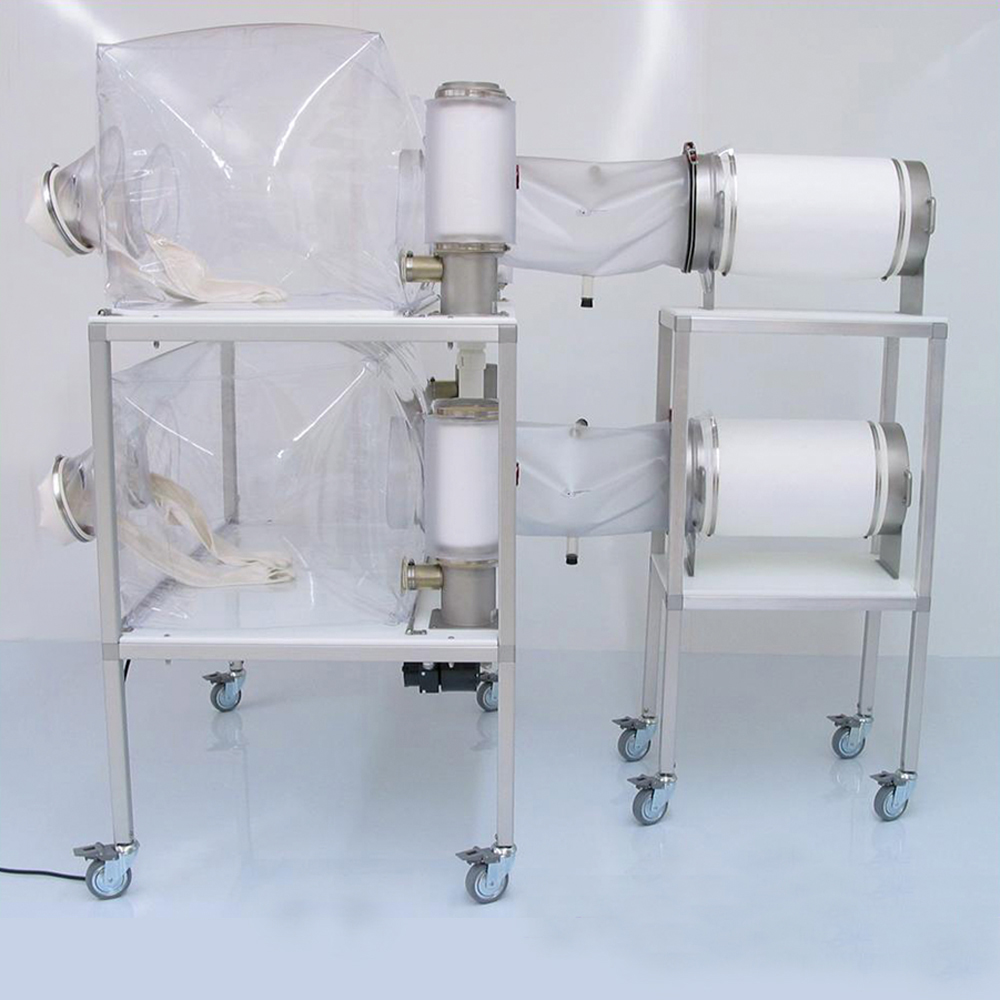
Single-tier flexible film (softwall) isolator "Starter Lab" package includes:
- 1 ½" steel powder coated single shelf frame to prevent bending or warping.
- HDPE tabletop with inserts for attaching isolator components.
- Two-way locking wheels.
- 5/8" PVC hold-down rod and SS clamps.
- Blower and manifold system.
- (1) 20 mil vinyl isolator.
- (1) 20 mil urethane floor mat protector for inside the isolator.
- (1) 3/8" closed cell foam pad for under isolator.
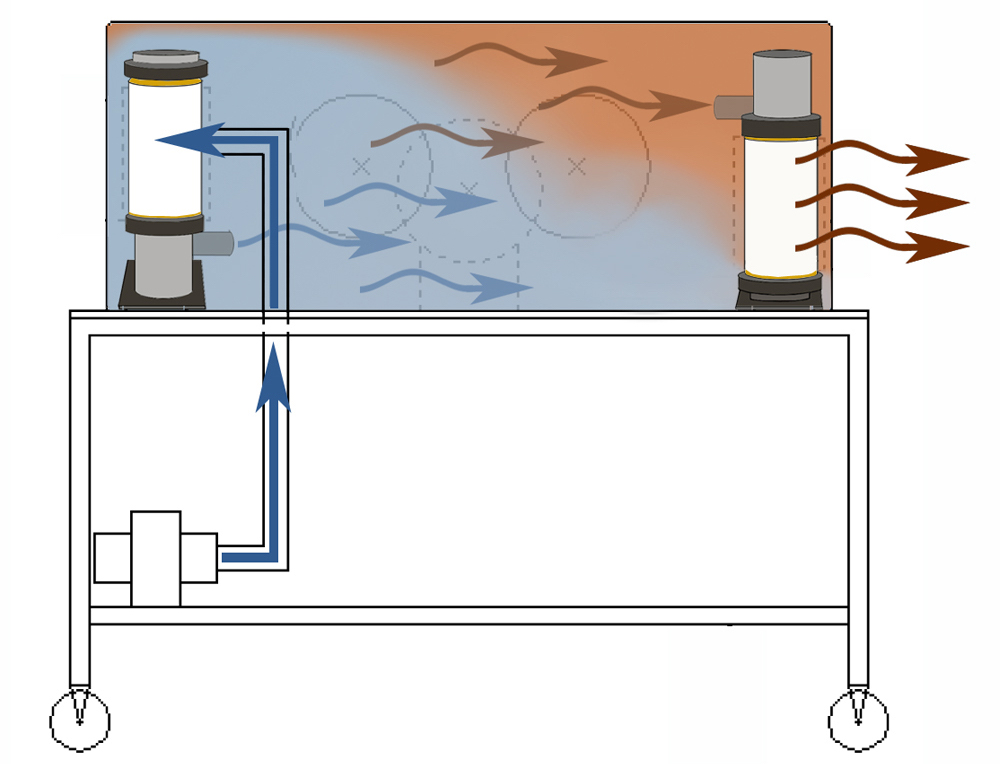
- (1) complete 5" diameter inlet filter & (1) complete 5" diameter outlet filter (includes filter media, filter covers, rubber bands and clamps). Note: Lower inlet port and upper outlet port can easily handle warm, moist air. Combined with our standard 5" filters (vs. competitive 3" filters), this design provides greater airflow and improves the isolator's living environment (see graphic below).
- (2) 2" neoprene stoppers.
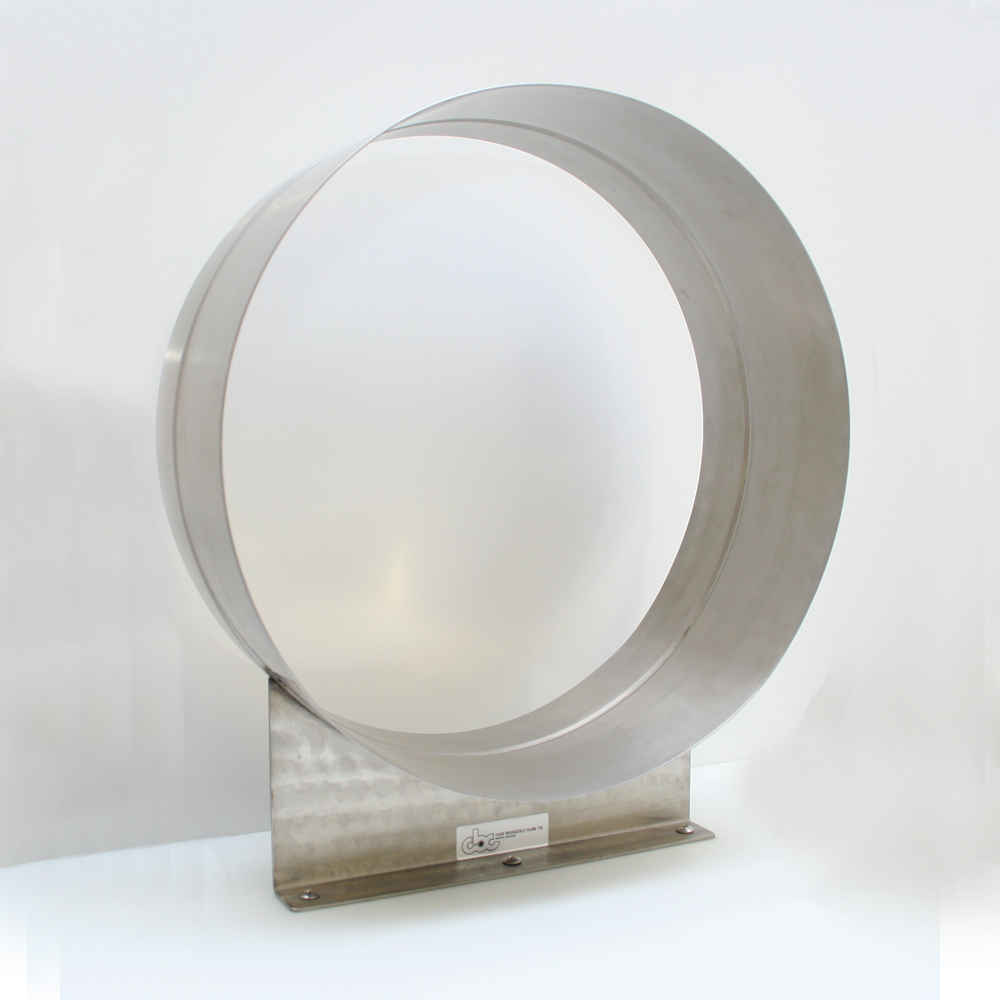
- (1) Transfer port (size & type to your specifications)*.
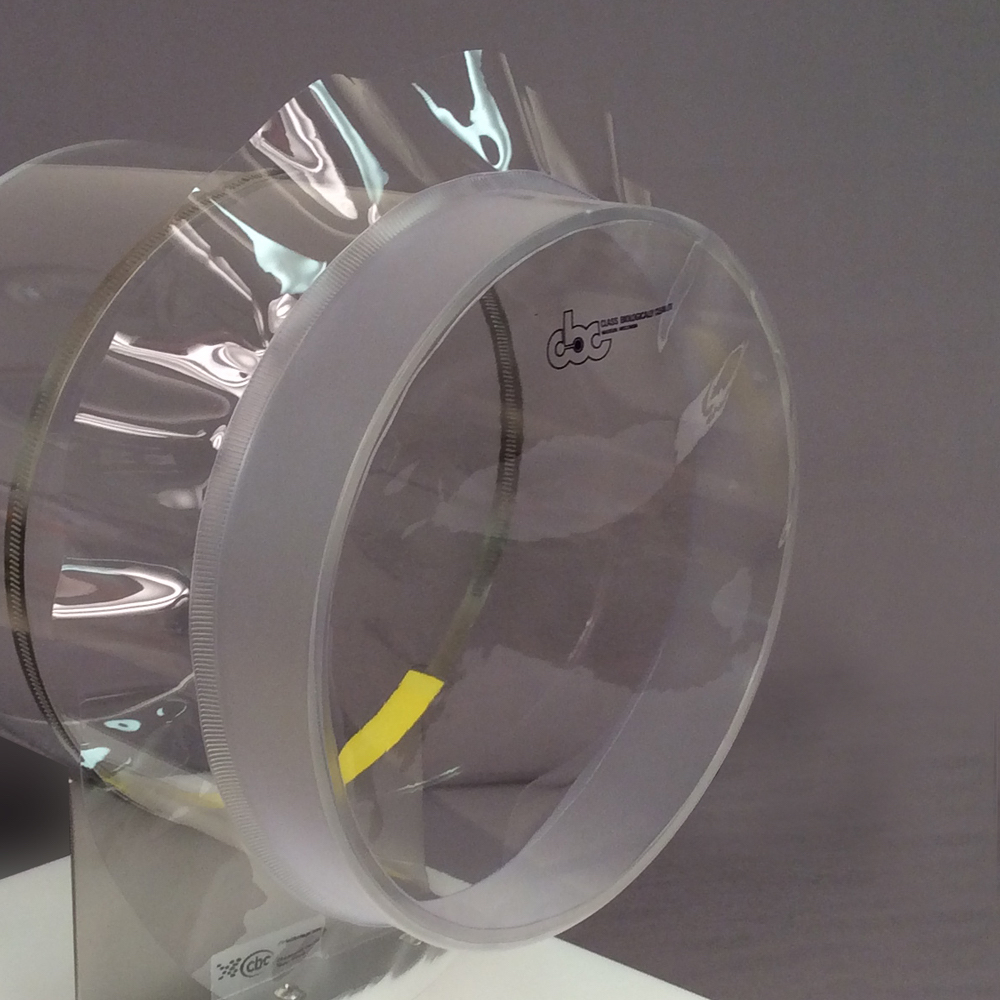
- (1) Port to isolator neoprene band and clamp for sealing isolator to transfer port.
- (1) each of inside and outside transfer port caps.
- (1) Patent clamp for attaching outside port cap to transfer port.
- (1) Patent clamp for sterilizing cylinder
- (1) inside rubber band for attaching inside transfer port cap.
- (1) pair of 12" diameter/8"glove port CBC glove extensions for better worker dexterity and less stress on isolator. (Note: Available without.)
- (1) pair of 15 mil Hypalon/CSM Dry Box Gloves with glove ring kit for attaching gloves to isolator (other types available).
- (2) 1" neoprene stoppers (other types available).
- (2) internal racks that can accommodate up to nine mouse cages each (for isolators over 4' in length).
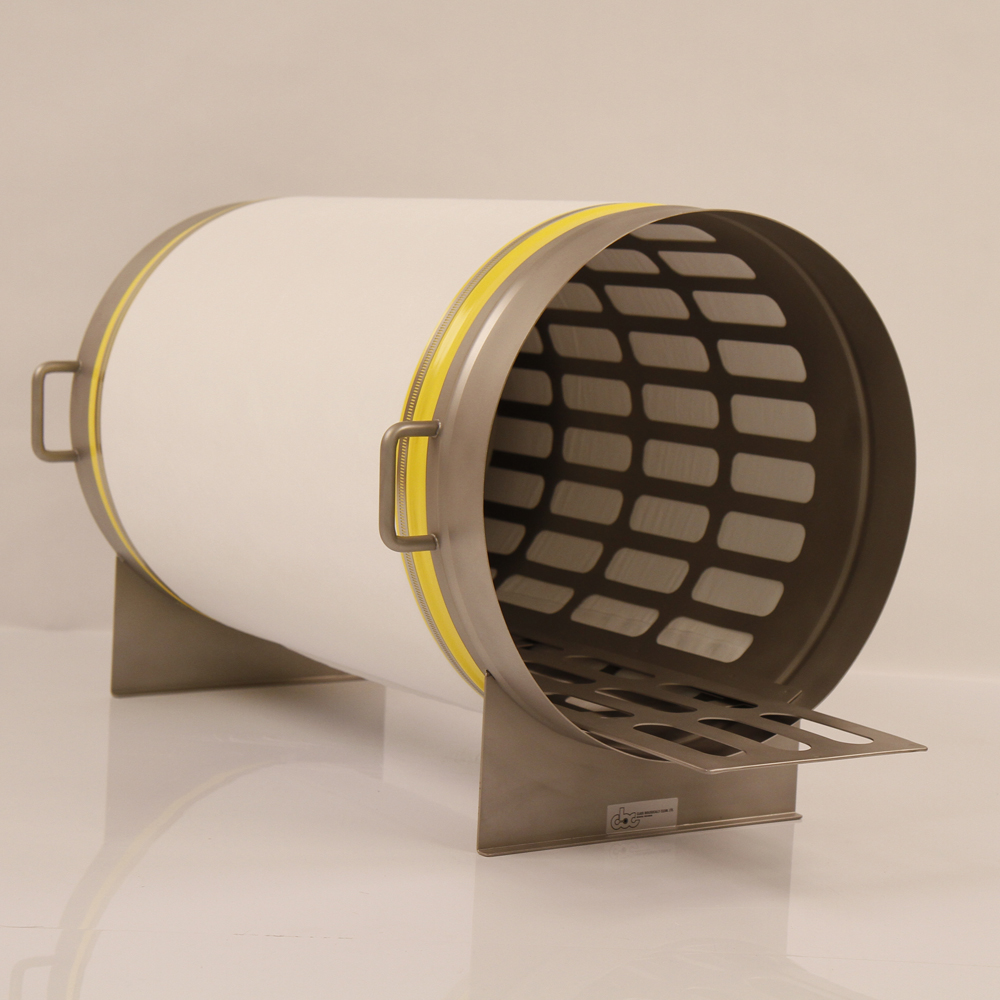
- (1) Sterilizing Cylinder (size & type to your specifications).
- (1) Single-tier sterilizing cylinder transfer cart/trolley with two-way locking wheels.
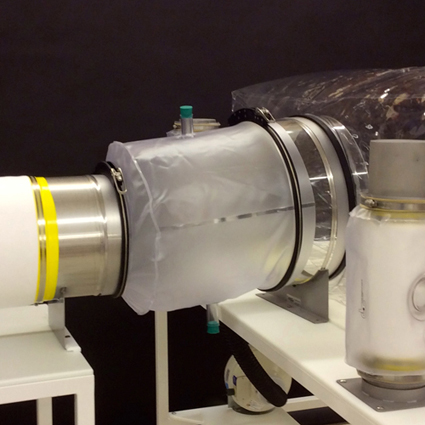
- (1) Transfer sleeve for connecting sterilizing cylinder to transfer port.
- (1) roll of Mylar film.
- (6) rolls Mylar tape.
- (1) Atomizer, hose, compressor and cart.
- (6) rolls yellow vinyl tape.
- (1) set of inside and outside replacement port caps.
- (1) replacement transfer sleeve.
- (1) TransDisk™.
- (1) roll vinyl patch tape.
- "Starter Lab" package is customizable.
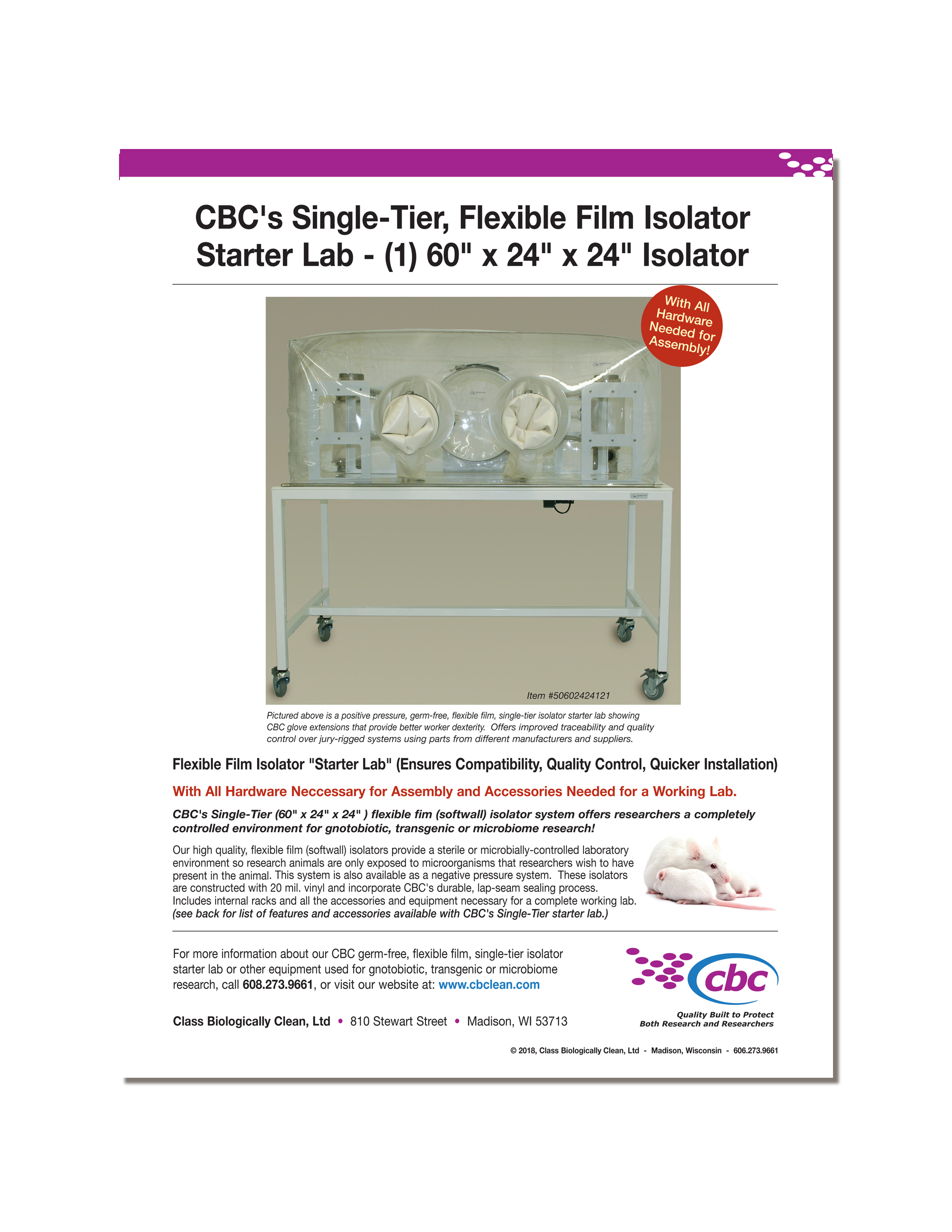
Download Printable Flyer
Download a printable flyer about the CBC Single-tier Starter Lab.
Download Printable PDF
Download Printable PDF
CBC' Quality Control Tracking
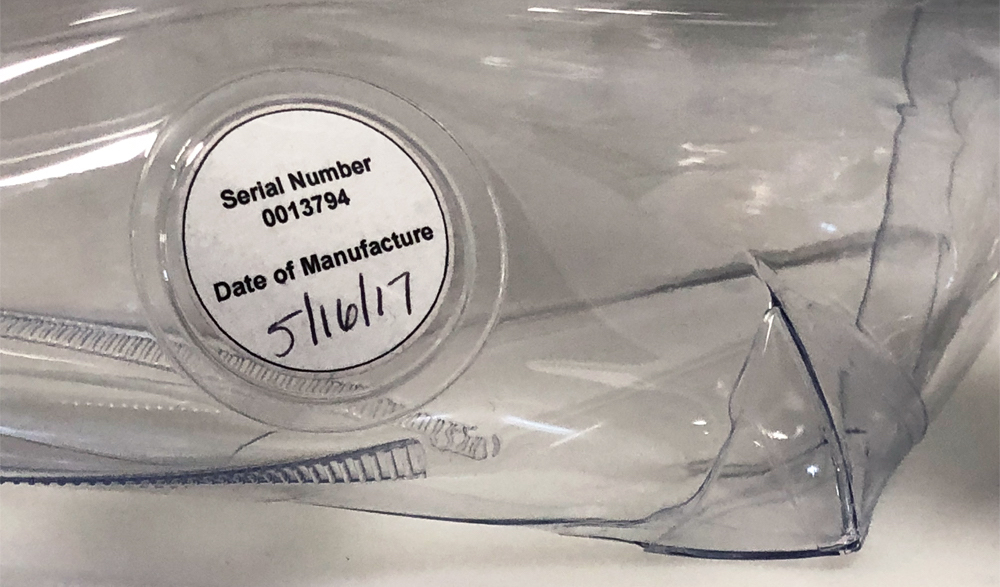
When you buy one of our gnotobiotic isolator systems or just a canopy, your canopy will be marked with its own unique serial number and manufacture date. Should you ever have a issue with the canopy (or need a replacement) CBC can trace your canopy back to the exact specs previously ordered. The same for replacement canopies for existing frames and filter systems.
- Traceability.
- Faster replacement.
- More accurate replacement.
Each CBC Flexible Film Canopy is Marked With its Own Unique Serial Number and Manufacture Date to Ensure Traceability and Better Customer Support.
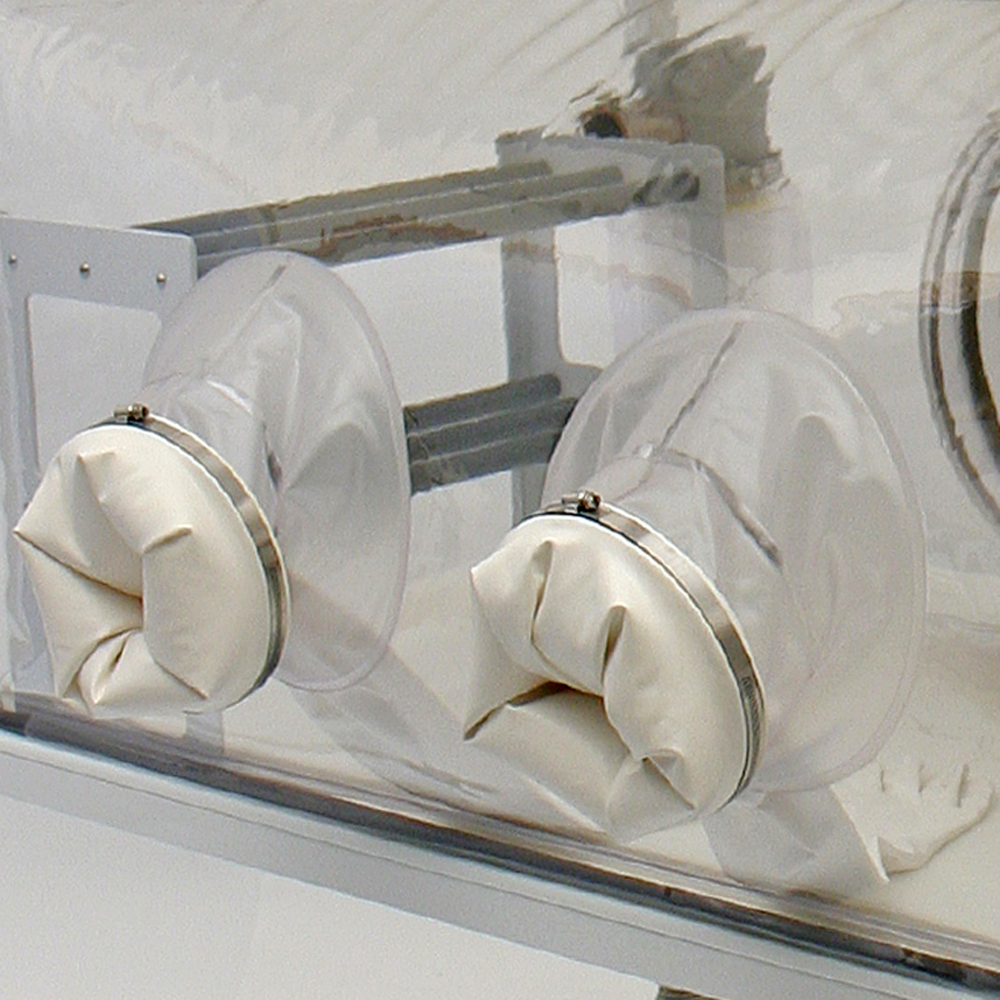
CBC Glove Port Glove Extensions for Better Worker Dexterity and Less Stress on Isolator
CBC glove extensions (optional) provide better worker dexterity and help reduce stress on isolators at a critical seam areas. Read more
The CBC Difference
The CBC difference includes our original lap-seam sealing process and the use of 20 mil. polyurethane material that is almost indestructible and helps ensure against contamination due to accidental puncture or tear.
CBC uses a highly durable "lap seam" seal for the majority of our seams, and an even superior "cut/weld/strip seam" seal for high risk areas. Because your reputation, research or production should not risk being compromised! (See, "Pull Test" and "Puncture Demonstration" videos below.)
The CBC Lap-Seal Seam "Pull" Test
Single Seam Seal vs. CBC Lap Seal Seam Read more
Because your reputation, research or production should not risk being compromised!
20 mil. Polyurethane Puncture Demonstration
CBC's 20 mil. polyurethane material is almost indestructible and helps ensure against contamination due to accidental puncture or tear. Read more
Because your reputation, research or production should not risk being compromised!
Improved Living Environment
CBC's lower filter inlet port and upper filter outlet port can more efficiently remove warm, moist air. What's more, our 5" diameter design (vs. competitive 3" diameter) provides greater airflow. The larger filter diameter combined with CBC's unique "inlet/outlet" port design help improve the isolator's living environment.
Accessories and Components:
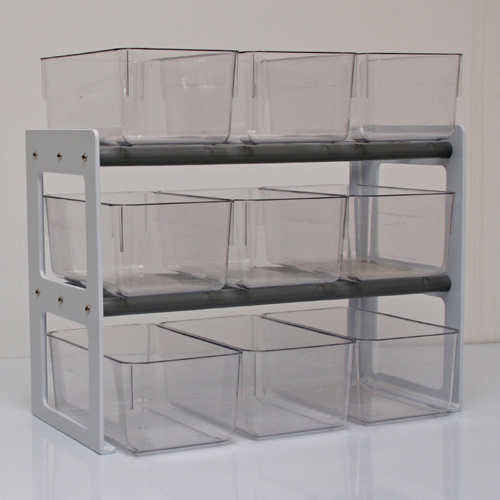
Internal 9-Cage Isolator Rack
9-cage is standard. 5-cage racks for CBC's Quad isolator system. Custom sizes are available. Read more
CBC's internal isolator cage racks are easier and faster to assemble!
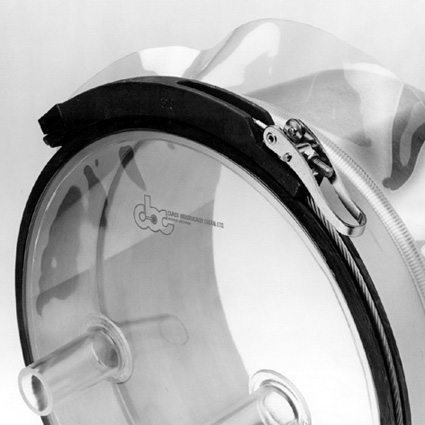
CBC Patent Clamp
CBC's Patent Clamp for quickly, and securely attaches transfer port caps. Read more
Patent Clamp with neoprene-gooved band reduces need for vinyl tape

Manufacturing high quality, flexible film isolators for universities, researchers and germ-free animal producers since 1978.
Single-Tier Isolator Systems
CBC Single-Tier isolator systems ensure compatibility, quality control, Quicker installation, better traceability & easier reorders.
Single-tier flexible film isolator systems with all hardware and components necessary for assembly. More Information
Send Us a Message

Protecting Both Research and Researchers
Animal Research Gnotobiotic Isolators | Bio/Pharmaceutical Barrier & Containment Isolators
608.273.9661
●
810 Stewart Street, Madison, Wisconsin 53713
●
info@cbclean.com


© 2011-2022 Class Biologically Clean, Ltd. - Madison, Wisconsin - All rights reserved
® CBC is a Registered Trademark of Class Biologically Clean, Ltd.